In modern production environments and laboratories, ergonomic equipment is no longer a luxury—it is essential for both efficient operations and a healthy work environment. When workstations, lifting tasks, and workflows are tailored to the employee, companies can reduce strain, minimize errors, and increase productivity.
But how exactly does workplace ergonomics relate to efficiency and safety in practice? And what different solutions are available?
What does "ergonomic equipment" mean in the industrial sector?
In industry, ergonomic equipment refers to solutions that reduce physical strain and optimize work processes. This applies to manufacturing, laboratories, and the pharmaceutical industry, where standards for both precision and the work environment are high.
Typical elements of the industrial work environment include:
- Adjustable workstations
- Lifting Equipment and Material Handling Solutions
- Custom Workbenches and Process Equipment
The purpose is to ensure that employees can work efficiently without unnecessary strain from heavy lifting or improper postures.
How Ergonomics Improves the Work Environment and Safety
A poorly designed work environment can lead to both workplace injuries and reduced productivity. Repetitive movements, heavy lifting, and poor posture increase the risk of repetitive strain injuries and absenteeism due to illness.
With the right ergonomic solutions, companies can:
- Reducing the Risks of Heavy Lifting
- Improve Employee Well-Being
- Improving Safety in Daily Workflows
It's not just about comfort—it's about ensuring stable and safe operations.
Examples of Ergonomic Equipment in Manufacturing and Laboratories
In practice, there are a number of solutions that support both efficiency and ergonomics in production and laboratories.
Examples might include:
- Height-adjustable tables and adjustable workstations that can be customized for each operator
- Vacuum lifters and lift trolleys for gentle handling of workpieces
- Overhead and slewing cranes for repetitive lifting in production
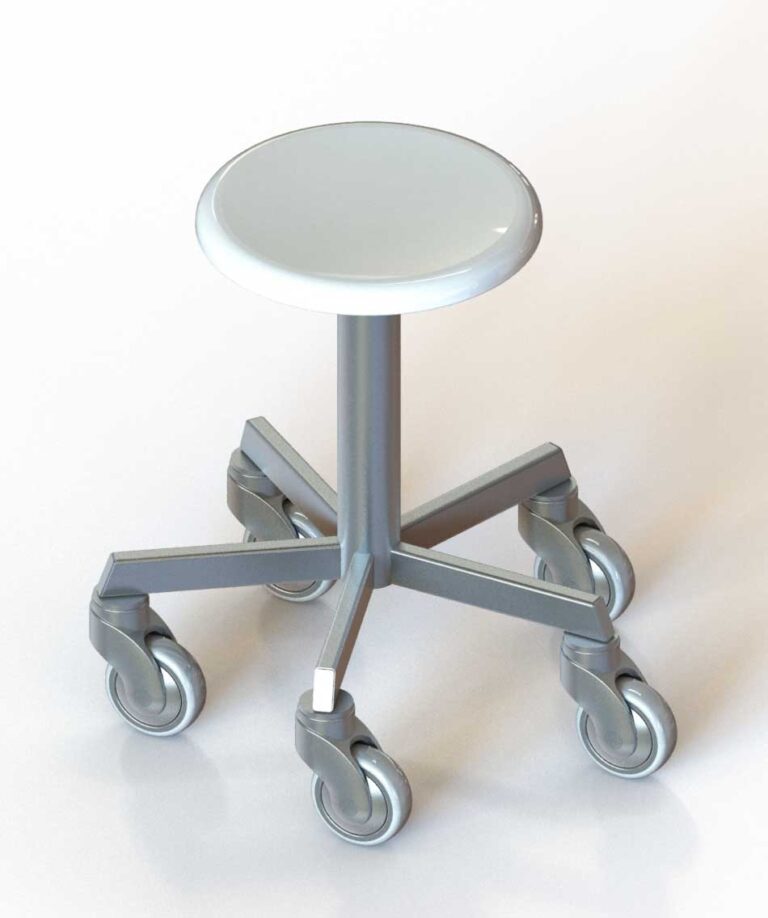
- Adjustable-height tables and custom-designed workbenches for laboratory work
These solutions reduce the need for manual handling and make it possible to optimize both work processes and production flow.
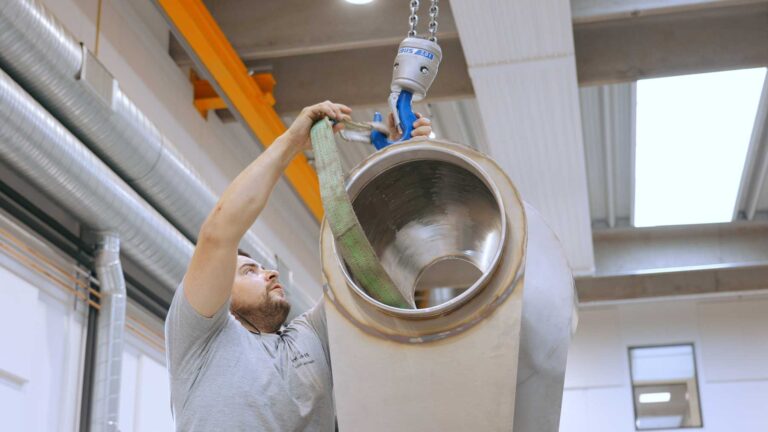
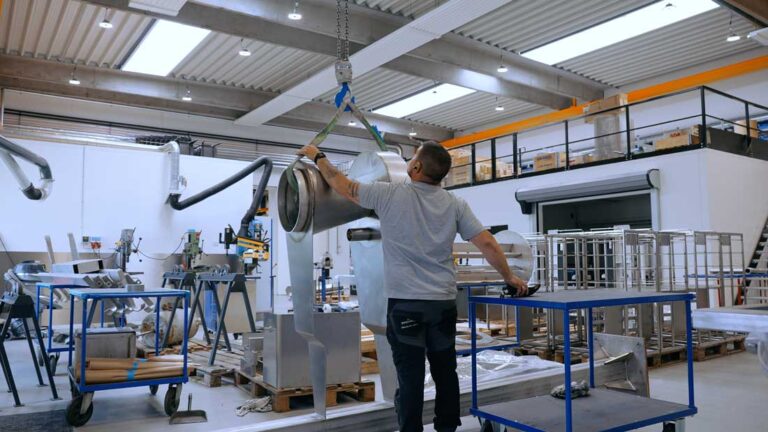
Lifting Equipment and Process Optimization in Industry
Efficient industrial lifting equipment plays a central role in modern manufacturing. When lifting is automated or mechanically assisted, workflows become both faster and more consistent.
The use of ergonomic lifting equipment contributes, among other things, to:
- Less physical strain
- Fewer errors in handling
- Improved production flow
At the same time, ergonomics is closely linked to process optimization. When workstations and material handling are well-designed, it becomes easier to create stable and efficient production processes.
Custom Solutions Tailored for Manufacturing and Laboratories
Standard equipment is not always sufficient—especially in complex environments such as the pharmaceutical industry and laboratories.
Here, ergonomic solutions for industry can be developed as custom-designed systems that take into account
- Specific Workflows
- Space and Integration
- Hygiene and Materials Requirements
At HRS, we provide both standard and custom solutions for the industry. You can read more about our work with innovation and custom solutions, as well as our approach to the pharmaceutical and laboratory sectors.
Ergonomics as an Investment in Operations and Quality
Ergonomics isn’t just about employee comfort—it’s also an investment in both operational reliability and quality. When workstations, production equipment, and material handling are optimized, the conditions for stable production and fewer errors are improved.
At the same time, a good work environment contributes to higher employee satisfaction and lower absenteeism—factors that ultimately impact the bottom line.
Frequently Asked Questions About Ergonomic Equipment
Ergonomic equipment consists of solutions designed to adapt work to the human body and reduce physical strain.
Ergonomics reduces the risk of injury, improves posture, and enhances safety in daily work routines.
These can include vacuum lifters, lift trolleys, cranes, and lifting tables—depending on the task and the environment.
Yes, especially in laboratories where repetitive movements and precision work place high demands on workstations and equipment.